Embed from Getty Images Robert Taylor and Barbara Stanwyck after their elopement to San Diego in 1943.
Saturday, August 27, 2022


Monday, August 22, 2022
The Alternate Movie Title Game (Burt Reynolds Edition)

1. Three Feet to Go.
2. Dominoe.
3. Country Music and the Crook.
4. Billy Clyde, Shake, & Bookman.
5. Moonshine.
6. Let's Make Haste. (This one is a bit funky!)
7. Single Again.
8. Eight Dozen Weapons...Plus Four Bonus Ones, Amigo!
9. The Mississippiensis Nickname.
10. News Front.
11. The Sparkle of Diamonds.
12. The Boston Cops.
13. Kill Me, Please!
14. I Want a Baby.
15. The Chicken Ranch.
Sunday, August 14, 2022
Classic Film Photo of The Week: Joan Collins and Gardner McKay
Embed from Getty Images
A smiling Joan Collins and a serious
Gardner McKay are attending a party circa 1959 celebrating composer Jimmy McHugh's 35-year career. Collins had recently appeared in the 1958 films Rally 'Round the Flag, Boys! and The Bravados. McKay was then starring in the TV series Adventures in Paradise.
Monday, August 8, 2022
Atragon: The Super Submarine That Flies...and Drills!
 |
| Atragon's flying submarine. |
 |
| The Empress of Mu and her minions. |
 |
| The disappointing Manda. |
Atragon unfolds much like a 1940s serial with chapters devoted to the kidnapping, the rise of Mu Empire, Makoto's reunion with her father, the attack on the Mu, and so on. Even the film's "hero," a magazine journalist played by Tadao Takashima, reminds one of an intrepid protagonist from an old Hollywood serial. The comparison is intended as a compliment, for even though Atragon boasts a choppy narrative, it's rarely dull.
 |
| A sub that can drill through rock! |
Based loosely on the 1900 Japanese novel The Undersea Warship, Atragon performed well at the international box office. It was called Atoragon in many countries, which appears to be a combination of "atomic" and "dragon" (apparently in reference in Manda). However, in the U.S., its distributor American International Pictures, referred to the flying sub as Atragon in its publicity materials. That's confusing because the submarine's name in the movie is Gotengo. But, as often the case with movies retitled for their American release, the new title has persisted over the years.
Friday, August 5, 2022
Classic Film Photo of the Week: Suzanne Pleshette and Troy Donahue
Embed from Getty Images
Suzanne Pleshette and Troy Donahue were married in a civil cermony at the Beverly Hills Hotel on January 4, 1964. The guests included Rock Hudson, Richard Chamberlain, Gig Young, and Carl Reiner. The couple divorced just nine months later.
Monday, August 1, 2022
Seven Things to Know About Buddy Ebsen
 |
| Ebsen as Jed Clampett. |
 |
| With Lee Meriwether in Barnaby Jones. |
3. Director Ron Howard originally offered the role of Art Selwyn in Cocoon (1985) to Buddy Ebsen. However, Ebsen was contractually obligated to the Matt Houston TV series at the time and he couldn't accept the part. Don Ameche went on to win a Best Supporting Actor for that role in Cocoon. Ebsen and Howard knew each from working together in the made-for-TV movie Fire on the Mountain (1981) and on The Andy Griffith Show (where Ebsen guest-starred in the episode "Opie's Hobo Friend").
4. Buddy Ebsen was not only originally cast as the Tin Man in The Wizard of Oz (1939), but he filmed several scenes with Judy Garland, Ray Bolger, and Bert Lahr. The make-up for Dorothy's three companions proved tortuous, especially for Ebsen. His costume and make-up were altered several times, but he could barely sit down and dancing was "an ordeal of pain." However, it was the aluminum dust used in his make-up that almost killed him. He began experiencing severe cramps and shortness of breath. He wound up being hospitalized for two weeks and recuperating for an additional six weeks. In the meantime, MGM recast the role of the Tin Man with Jack Haley.
5. Ebsen played a lighthouse keeper opposite orphan Shirley Temple in Captain January (1936), one of her most successful films. Of his young co-star, Buddy once said: "Of all the moppet stars to come down the pike, the most classic, enduring, and once-in-a-lifetime package of talent and stardom was Shirley Temple."
 |
| Ebsen as Georgie Russel. |
7. Buddy Ebsen was married three times and had seven children: two daughters with first wife Ruth Cambridge and four daughters and a son with second wife Nancy Wolcott. He and third wife Dorothy Knott had no children. Daughter Kiki Ebsen is a singer-songwriter who has released several albums.
Monday, July 25, 2022
An Interview with Will Hutchins on Sugarfoot, Elvis, and Working at Warner Bros.
 |
| Will Hutchins in 1971. |
Café: How did you get into show business?
Will Hutchins: I was a student at Pomona College from 1948 to 1952, which is in Claremont, California. We were the mighty Sagehens! I was the very first drama major. I was a slow reader…if I had been an English major, I would have been drafted and suffered that most dreaded of all diseases: “Gonna Korea!” Dick (Richard) Chamberlain came along a couple of years later. He was an art major. After college, I served in the Army in the Signal Corps, where I was stationed in Paris, France, for two wonderful years. When I got out, I worked for the postal department as a special delivery messenger. I decided I couldn’t do that for the rest of my life, so I went to the UCLA film school. During my time there, they had an all-points bulletin at NBC for a live show called Matinee Theatre (1955-58). It was on every day at noon for an hour. It was like doing a play every day with a different cast and story. I tried out and got roles in several episodes. Audrey Totter played my mother in one of them (“Letter of Introduction”). I was so in awe of her that I forgot my lines coast to coast—but she pulled me though. Dick Clayton, the agent of Tab Hunter and Jimmy (James) Dean, saw me on Matinee Theatre and called me. I went to work at Warner Bros., where I didn’t cost them a lot of money. Warners put me in films like Lafayette Escadrille and No Time for Sergeants (both 1958).
Café: What led to your casting as the star of Sugarfoot?
Will Hutchins: Warner Bros. put me in an anthology TV series called Conflict, which was on every other week after Cheyenne. There was an episode called “Stranger on the Road” and I played the stranger on the road. I was on the lam and I went to work for Barton MacLane on his ranch, even though I was a dude. There was one scene where I get on a horse backwards. At the end of the show, Rex Reason, the foreman, beat the crap out of me, but my character keeps getting back up and the foreman just quits in exhaustion. Warner Bros. thought that was a pretty good show. So, they redid The Boy from Oklahoma (1954), which was a Will Rogers, Jr. movie, and adapted it into Sugarfoot. I didn’t appreciate how good all those shows were until now. I'm watching them all now because I’m writing my last article (at westernclippings.com) about my admiration for my female co-stars on Sugarfoot. They were just brilliant. That was a wonderful five years at Warner Bros.
Café: What is your favorite Sugarfoot episode and why?
 |
| Will Hutchins as Tom Brewster in Sugarfoot. |
Café: TV Westerns dominated the airwaves in the 1960s, but their popularity faded in the 1970s. What do you think happened?
Will Hutchins: There was a glut. There were too many Westerns. They kept doing the same shows over and over again. Bob Hope called NBC “Nothing But Cowboys.” There were over 134 Westerns at one time or another. Everything changes and nothing stays the same. It’s just a natural course of events. I’ve been doing my column on old-time movies at westernclippings.com for 28 years. As Groucho Marx said: “Time flies like an arrow and fruit flies like bananas.”
Café: In the mid-1960s, you starred in two movies with Elvis Presley: Spinout and Clambake. What was it like working with the King of Rock’n’Roll?

Café: Monte Hellman’s The Shooting (1966), which co-starred Warren Oates and Jack Nicholson, is often described as an existential Western (!). What do you recall about the making of that film?
Will Hutchins: It was a de facto honeymoon. I had married my first wife (Carol Burnett's younger sister, Chrissie Burnett) in New York when I was doing the play Never Too Late. I had replaced Orson Bean in the lead role. I did it for two years and when it folded, I went right into The Shooting. My wife came along. We shot the film about an hour outside of Kanab, Utah, on an old Western town set that was built for the Frank Sinatra film Sergeants 3 (1962). I got top billing in The Shooting because I was better known at the time than the rest of the cast. Jack and Warren weren’t well known. Millie Perkins was famous for The Diary of Anne Frank (1959). It took a long time for the film to come out, but when it did, Jack Nicholson was the star and then Warren Oates. I saw it recently on TCM and all that Ben Mankiewicz talked about was Jack, Millie, and Warren. Just before the picture started, he said: “Oh, yes, with Will Hutchins.” Hmm.... Anyhow, I enjoyed working on The Shooting a lot. It was a beautiful script written by Carole Eastman, whose brother had a bit part in the movie. I remember one day I went back to Warners to try out for a movie by Francis Ford Coppola1—I didn’t get the part—and the guard at the gate says: “Sugarfoot, is that you? Have you learned to ride a horse yet?” I should have said to him: “Go see The Shooting.” I rode my guts out in that one, praying all the way that my horse wouldn’t step into a gopher hole. I rode like the wind.
Café: Later in the 1960s, you starred in two short-lived TV series: Garry Marshall’s Hey, Landlord and Blondie (based on the famous comic strip). Which was the better show?
Will Hutchins: Hey, Landlord could have been the better show if they hadn’t cast me in it. I needed the work, so I took it. I was at a party at Lucille Ball’s house once and I was sitting there with her husband Gary Morton at dinner. He said: “Your show isn’t funny.” I couldn’t argue with that and I think a lot of it had to do with me. Garry Marshall was surprised the show lasted the whole season because our ratings were so lousy. He brought in Michael Constantine to play the cranky renter in the New York brownstone apartment house owned by my character. They also brought in Sally Field to play my sister. They tried everything. Now, I loved Blondie. My wife at the time said I was a natural Dagwood! Unfortunately, Pat Harty (who played Blondie) wasn’t happy because the producers told her she’d be another Lucille Ball and I got to do all the crazy stuff. Peter Robbins, who played my son, went on to provide the voice for Charlie Brown in the animated specials. Sadly, he committed suicide this year. Pamelyn Ferdin2 played my daughter. We were like a family. I enjoyed doing a lot of slapstick stuff. I even did an impersonation of James Cagney singing “Yankee Doodle Dandy,” complete with choreography. One of the Blondie guest stars was Bruce Lee (in the episode “Pick on Someone Your Own Size”). It was great working with him. He was so spiritual. We did a scene where he was showing me how to defend myself against the town bully, Bruce Gordon, and it was beautiful choreography. I‘d love to have a copy of that episode.
Café: Two of your films have become cult favorites: the made-for-TV movie The Horror at 37,000 Feet (1973) and the Warner Bros. potboiler Claudelle Inglish (1961). Do you have any interesting stories from making those movies?
 |
| Will Hutchins and Diane McBain in Claudelle Inglish. |
Café: I always enjoy asking this question: Who were some of your favorite co-stars?
 |
| Anita Gordon, Will Hutchins, and Peter Brown in the "Hideout" episode. |
Café: Your wife Barbara was an extra in such memorable films as Midnight Cowboy, Carrie, and Hello, Dolly. How did the two of you meet and was it love at first sight?
 |
| Will and Barbara Hutchins at a festival. |
Barbara Hutchins: It’s sort of right. I was in the city with some girlfriends who adored him. I didn’t have much of a stake in the game, but I took them into the city. We did wait for him to come to the theatre. I walked up to him, but I didn’t ask him for his autograph. I said: “Hello, Mr. Hutchins. My name is Barbara Torres and I’m a national thespian.” And he looked down at me and said: “Call me Will.” And the moment he said “call me Will,” my heart stopped and I fell in love with him. As luck would have it, I was in the city going to acting classes. I was just out of high school. And he let me come and see the show from backstage and that’s where it all began. We started to write to each other. Of course, it was all very platonic. He married Chris and did The Shooting. I thought, well, it’s a show business marriage and it will never last. Three years later, it didn’t. In 1970, I chased him out to L.A. and the rest as they say is history. We got married in April of 1988 and here we are.
 |
| Will Hutchins at home in 2022. |
Will Hutchins: In those days, we all knew each other. It was like a brotherhood. We’d get together for Western film festivals and reunions. We were always running into each other. Most of the guys I knew really well were at Warner Bros.
Café: Thanks so much to both of you for taking the time to talk with me today.
Barbara Hutchins: It was fun...hope that it was for you, too!
1 The Francis Ford Coppola movie was Peggy Sue Got Married (1986).
2 Pamelyn Ferdin later provided the voice for Lucy in the animated Peanuts specials. So, the child actors who provided the voices of Charlie Brown and Lucy both starred in Blondie with Will Hutchins.3 James Dean and Arthur Kennedy appeared together in the 1952 Broadway play See the Jaguar, which closed after five performances.
Monday, July 18, 2022
A Disappointing Ride Up the Elevator to the Gallows
 |
| Maurice Ronet as Julien. |
"Near-perfect," I said. After Julien coolly commits the crime, he realizes a critical mistake and quickly heads back to retrieve an incriminating piece of evidence. There's only one problem: It's Saturday and, as Julien rides the elevator to the dead man's office, a security guard shuts off the building's power and departs for the weekend. That leaves Julien trapped between floors.
 |
| A revolver to the head. |
However, the trouble with Elevator to the Gallows is that the rest of the movie can't live up to its brilliant opening. Julien's dilemma in the elevator takes a backseat to two other stories: a rebellious young man and her girlfriend who takes Julien's roadster for an extended joyride and Florence's confusion over Julien's failure to rendezvous at the appointed place and time.
 |
| Moreau bathed in natural lighting. |
In contrast, too much time is spent on the youths played by Georges Poujouly and Yori Bertin. The young man's disenchantment with his monotonous life leads him to assume Julien's identity with disastrous consequences. Malle's challenge is that these characters are not compelling, even though one could argue the angry young man is the forerunner to Jean-Paul Belmondo's reckless "hero" in Godard's 1960 New Wave classic Breathless.
Fans of jazz music may enjoy the improvised soundtrack by jazz legend Miles Davis. It was supposedly recorded in one night while Davis and four other musicians watched scenes from the film.
While Elevator to the Gallows fails to live up to its reputation, it did launch Louis Malle's impressive career, make a star of Jeanne Moreau, and cement Miles Davis's reputation as an influential jazz artist. Those may be sufficient reasons to watch it. However, I still can't help but wish that Elevator to the Gallows could have sustained the brilliance of its opening scenes.
Monday, July 11, 2022
The Alternate Movie Title Game (Kirk Douglas Edition)

1. Einar in Love.
2. Carnival.
3. The 21st Precinct.
4. Whiskey and Burns.
5. To Tell Jocelyn?
6. Nightingale for Senate.
7. Esmeralda and Me.
8. Saboteurs in the Snow.
9. The Magic Note.
10. Build My Gallows High.
11. Gloves of Steel.
12. Timber Baron.
13. Tribute to a Bad Man.
14. The Exploding Head.
15. Doyle & Long.
Monday, July 4, 2022
Chandler: Not Raymond, but Warren Oates
 |
| Warren Oates as Chandler. |
Mike Laughlin, who had produced Two-Lane Blacktop, signed on as producer. Leslie Caron was cast as the female lead. MGM planned to distribute it. In the biography Warren Oates: A Wild Life, Caron notes that her husband, whom she considered a good judge of film properties, was impressed with the script. Chandler must have sounded like a promising endeavor, but, alas, the final product is a convoluted mess.
Oates plays the title character, a washed-up private eye in contemporary L.A. who has gotten desperate enough to pawn his Smith and Wesson. When an old friend offers him a job trailing a woman, Chandler senses something is amiss. However, he needs the money...and perhaps a little self-respect.
 |
| Leslie Caron as Katherine. |
I suspect the idea behind Chandler was to transplant a tough private eye and a mysterious lady--familiar characters in 1940s film noir--to modern times. The two leads, especially the world-weary Oates, are up to the task of playing a couple of lost souls who find each other. Unfortunately, they are saddled with a muddled plot and esoteric dialogue. (Katherine: "What are we going to do now? Chandler: "Nothing. Something.") And since Chandler was made in the early 1970s, that means there's always a chance that the ending will be left up in the air (at least partially).
I will say that writer-director Paul Magwood makes maximum use of the on-location filming in Carmel and Pebble Beach. The ocean views almost had me calling a travel agent. However, in addition to the pretty backdrops, Magwood adds some realism to his film by shooting scenes in a real hotel, a pest extermination office building, and along the winding roads of Carmel.
 |
| Mitchell Ryan as one of the villains. |
A nice surprise in Chandler is what amounts to a cameo by Gloria Grahame as one of Oates' friends. In the biography Gloria Grahame, Bad Girl of Film Noir, author Robert J. Lentz writes that Magwood and producer Laughlin took out a full page ad in The Hollywood Reporter to apologize for Chandler. They claimed that MGM executive James T. Aubrey had the film re-cut, added scenes, and changed the music score. That is likely true given the film's running time of under 90 minutes and its horribly inappropriate music.
Monday, June 27, 2022
The Movie Quote Game (Billy Wilder Edition)

1. "I'd better take that thermos of cocoa with me. It helps me wash down down the pills."
2. "Do you realize that Otto spelled backwards is Otto?"
3. "Story of my life. I always get the fuzzy end of the lollipop."
4. "If I ever run into any of you bums on a street corner, just let's pretend we've never met before."
5. "You know, you see a girl a couple of times a week, just for laughs, and right away they think you're gonna divorce your wife. Now I ask you, is that fair?"
6. "I don't go to church. Kneeling bags my nylons."
7. "From the sound of your footsteps, I gathered that you were not in a particularly amiable mood."
8. "We're both trying, Don. You're trying not to drink, and I'm trying not to love you."
9. "Now, I don't propose to sit on a flagpole or swallow goldfish. I'm not a stuntman; I'm a flier."
10. "The poor dope--he always wanted a pool. Well, in the end, he got himself a pool."
11. "In Italy, the lunch hour is from one to four."
12. "Why don't you get out of that wet coat and into a dry martini?"
13. "I'm his brother-in-law, Sister. And this is his mother, Sister, and this is my wife, his sister, Sister."
14. "It's just like the first time I came here, isn't it? We were talking about automobile insurance, only you were thinking about murder. And I was thinking about that anklet."
15. "Sugarpuss, uh, before you go, would you... would you, eh, yum me just once more?"
Monday, June 20, 2022
Kolchak Returns in The Night Strangler
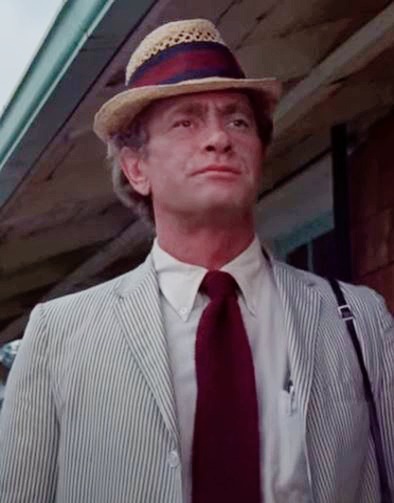
Kolchak quickly discovers the most recent murder is one of a series of killings with the same modus operandi. With the help of newspaper researcher Titus Berry (Wally Cox), Kolchak discovers a bizarre pattern of homicides: Every 21 years, six women are killed in the vicinity of Pioneer Square within a period of eighteen days. In each case, the victims' necks are crushed and a small amount of blood is drained by the base of their skulls. Kolchak presents his facts to the police, but they reject the notion that they're chasing a killer who is 144 years old!
The Night Strangler (1973) adheres closely to the formula that made The Night Stalker a rating smash the previous year. Once again, Kolchak proves capable of doing anything to get his story--even risking the life of an undergraduate student/exotic dancer played by Jo Ann Pflug (who admittedly agrees to serve as bait). Carl belittles the police for not doing enough and engages in shouting matches with his editor (who took a huge risk in hiring Kolchak after Vegas).
Indeed, the Kolchak character could be downright unlikable if not for the fact that he's played by Darren McGavin. The actor finds the key in portraying his larger-than-life character: For all his huff and puff, Kolchak just wants to uncover the truth. Kolchak provides his own comic relief at times, but he's also willing to do what it takes to make the streets of Seattle safe again.
 |
| Wally Cox as Mr. Berry. |
Richard Matheson (Duel), who wrote the teleplay for The Night Stalker, penned an original story for The Night Strangler. It also works better than the previous film, because the audience doesn't know what kind of monster is causing the mayhem. The climax in the Seattle Underground is also genuinely creepy. Note that there are two different versions of The Night Strangler, a 72-minute cut that aired in 1973 on the ABC Movie of the Week and a 90-minute cut released overseas for theatrical distribution.
 |
| Kolchak confronts his editor--again. |
Monday, June 13, 2022
Five Favorite Shark Movies


Monday, June 6, 2022
In Like Flint: James Coburn Returns as the Coolest Secret Agent

Actually, the title character is nowhere to be seen in the opening scenes of In Like Flint (1967). Instead, the plot focuses on a group of businesswomen who have set their sites on world domination. Their plans hinge on taking control of a space platform armed with nuclear weapons and replacing the U.S. president with a lookalike actor.
The latter scheme is almost executed perfectly. While the president is playing golf, a gas is deployed that places him and his colleagues in a trance for three minutes. During that time, the real president is kidnapped and the fake one takes his place. The one hitch is that Lloyd Cramden (Lee J. Cobb), one of the president's closest advisors, was timing the commander-in-chief's golf swing. Cramden can't figure out how it took the president three minutes to hit a golf ball. When he suspects a conspiracy within the White House staff, Cramden turns to Derek Flint to find out what happened.


Composer Jerry Goldsmith recycles some of his marvelous score from Our Man Flint and adds a melodic, instantly hummable title theme. Later in the film, you can hear the unusual, playful lyrics written by the late Leslie Bricusse. The song, known as "Your Zowie Face" (a reference to Cramden's organization, the Zonal Organization World Intelligence Espionage) has been covered by Nelson Riddle and his Orchestra and jazz guitarist Russell Malone.
At its best, In Like Flint is light, frothy fun if you can ignore its 1960s celluloid view of the conflicts between men and woman. Perhaps, Our Man Flint deserved a better sequel, but I'm glad we have one. 20th Century-Fox wanted to make a third Flint film. There are conflicting stories as to why that didn't happen. In 1976, ABC broadcast a made-for-TV movie called Our Man Flint: Dead On Target, a pilot for a TV series that never materialized. It starred Ray Danton as Flint. That just ain't right--James Coburn is the only Flint!
Monday, May 30, 2022
Movie-TV Connection Game (May 2022)
It's back for this month only after a long hiatus! The rules: You will be given a pair or trio of films, TV series, or performers and will be required to to find the common connection. It could be anything--two stars who acted in the same movie, two movies that share a common theme, etc. As always, don't answer all the questions so others can play, too. There is a single best answer for each question. Yes, that's means we're looking for something in particular!
1. John McIntire and Ward Bond.
2. Get Smart and The Prisoner (and, no, it's not that they're both about spies).
3. Priscilla, Queen of the Desert and Muriel's Wedding (it's not that they were made in Australian).
4. Elvis Presley and Robert Goulet (it's not that they're both singers).
5. Alan Ladd and Cliff Robertson.
6. Emergency! and Dragnet (there are at least two connections).
7. Have Gun--Will Travel and Mission: Impossible.
8. Cornel Wilde and Robert Taylor.
9. Robert Wagner and Cary Grant (an easy one!).
10. Muscle Beach Party and Thunderball.
11. The TV series Sky King and Lost in Space.
12. Lou Grant and Kolchak: The Night Stalker.
13. The movie Gunfight at the OK Corral and the TV series Star Trek.
14. Bullitt and Vertigo.
15. The Virginian and The Big Valley (no, it's not single parents nor ranches...the connection is an obvious one--though a little tricky).
Monday, May 23, 2022
Book Review: The Films of Delmer Daves by Douglas Horlock
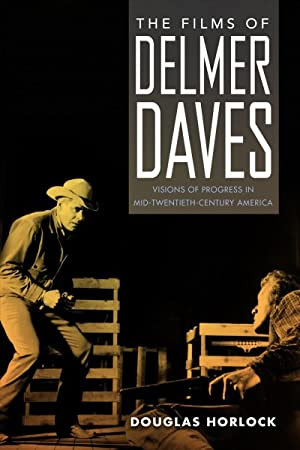
Daves became interested in acting, writing, and directing theater while studying law at Stanford University. His initial foray into the film industry was as a property assistant on The Covered Wagon in 1924. After graduating from Stanford in 1927, he pursued his interest in movies and received credit for his first screenplay with 1929's So This Is College. Over the next decade, he carved a highly successful career as a screenwriter with films such as Dames (1934), Flirtation Walk (1934), an adaptation of The Petrified Forest (1936), and Love Affair (1939).
 |
| Delmer Daves. |
Yet, Horlock notes that "Daves has remained largely overlooked in scholarly literature and film retrospectives" and has not achieved the auteur status attributed to directors such as Alfred Hitchcock, John Ford, Samuel Fuller, and even Douglas Sirk (whose glossy 1950s melodramas are comparable to Daves's later films A Summer Place and Parrish). Yet, like Hitchcock, Daves was intimately involved in the screenplays for his films, even those with which he did not receive a writing credit. Horlock traces recurring themes in Daves's films in chapters devoted to political and social values, race and civil rights, and gender. Horlock also includes this insightful comment from actor Glenn Ford, who worked with Daves on 3:10 to Yuma, Jubal, and Cowboy: "Nothing happened in a Delmer Daves film that wasn't intentional, from the camera set-ups to the wardrobe."
 |
| Delmer Daves's The Hanging Tree (1959). |
As befits its subtitle, The Films of Delmer Daves: Visions of Progress in Mid-Twentieth Century America is a scholarly volume for movie fans interested in thoughtful analyses. Still, that's not to say it isn't filled with fascinating facts (e.g., Warren Beatty was the original choice for the title role in Parrish, Daves's admirers include Humphrey Bogart, Alan Ladd, and Gary Cooper). At one point in his book, Horlock states: "Despite his working within the confines of a restrictive studio system, Daves's films deserve to be examined as the work of a serious artist of the cinema." That is exactly what the author
Sunday, May 15, 2022
The Four Favorite Noirs Blogathon in Support of National Classic Movie Day
As is our tradition at the Café, we are celebrating National Classic Movie Day on May 16th by hosting a blogathon. This year's Four Favorite Noirs Blogathon focuses on one of the most popular genres among classic movie fans. The goal is to pay tribute to many of the greatest films noirs, such as Out of the Past and Double Indemnity, as well as highlight lesser-known classics (e.g., Black Angel, Brighton Rock).

We invite you to check out the film noirs selected by the bloggers below!
Our Picks for the Four Favorite Noirs Blogathon
To celebrate National Classic Movie Day on May 16th, we're participating in our own Four Favorite Noirs Blogathon. For our quartet of noirs, we chose a bona fide classic (Out of the Past), an acclaimed cult film (Gun Crazy), and two lesser-known gems (Black Angel and Phantom Lady). Be sure to check out all the movies profiled in the Four Favorite Noirs Blogathon by clicking this link.
Out of the Past (1947) – My favorite film noir has Robert Mitchum as a man who has put his shady past behind him and found love with a good woman in a small community where he operates a gas station. But, as is often the case in the movies, his past catches up with him when a former acquaintance passes through town. With its contrasts of bright lights and dark shadows, Out of the Past is a visual feast. It’s also a compelling tale of a man pulled back into the shadows of his past—no matter how hard he tries to escape them. Kirk Douglas nails the manipulating villain; too bad he didn’t play more bad guys. Yet, despite the presence of Mitchum and Douglas, the film belongs to Jane Greer, an underrated and under-utilized actress who created one of the genre’s best femme fatales.
 |
| Jane Greer as Kathie. |
 |
| Peggy Cummins and John Dall. |
Gun Crazy (1950) - A film noir with a tragic love story involving a femme fatale and a gun-obsessed guy? That's the premise behind this low-budget cult film that was selected by the Library of Congress for inclusion in the National Film Registry in 1998. Director Joseph H. Lewis was a journeyman director with a resume that included some interesting "B" movies (My Name is Julia Ross and So Dark the Night). But none of his work comes close to the innovative style employed in Gun Crazy. The film's highlight is a three-and-half minute bank robbery shot in a single take from the inside of the getaway car. The climax is almost as mesmerizing with the two ill-fated lovers hiding out in a fog-enshrouded swamp as they listen to their pursuers' footsteps in the water. John Dall is superb as the gun-loving Bart, but Peggy Cummins owns the film as femme fatale Laurie. She exudes sexual energy with Dall while coming across as a cold, manipulative killer. But here's the beauty of her performance: Despite Laurie's bad girl persona and many faults, Cummins convinces the audience that her character truly loves Bart.
Black Angel (1946) - Singer Mavis Marlowe (Constance Dowling) augments her income via blackmail, so it's not surprising when she winds up murdered. The police arrest Kirk Bennett (John Phillips), one of her blackmail victims who had recently ended an affair with Mavis. Despite his pleas of innocence, Kirk is found guilty of first-degree murder and sentenced to die. His wife Catherine (June Vincent) stands by Kirk throughout his ordeal and never wavers in her belief that he is innocent. As Kirk awaits his execution, Catherine decides to conduct her own investigation--with the reluctant aid of Mavis' ex-husband (Dan Duryea). I'll avoid any plot spoilers here, but will note that Black Angel sports a clever twist, too. However, director Roy William Neill is the reason to see Black Angel. A "B" movie director for Universal, Neill is best known for his Sherlock Holmes films with Basil Rathbone. From the opening elaborate tracking shot up the side of a high-rise into Mavis's apartment to the innovative use of music, Neill displays a distinctive style that indicated a promising turning point in his career. It's a tragedy that he died of a heart attack at age 59.
 |
| June Vincent and Peter Lorre. |
Phantom Lady (1944) - After being stood up by his wife, Scott Henderson (Alan Curtis) meets a mysterious, distraught woman at an empty bar on a muggy Saturday night in NYC. When he ill-advisedly asks her to a show, she agrees on one condition: They exchange no names, no addresses, and never meet again. Scott agrees. Later that night, he goes home to find the police at his apartment. His wife has been strangled with one of his ties ("A knot so tight it had to be cut with a knife," says one of the detectives). Scott's alibi falls apart when he can't identify his mysterious date. Phantom Lady benefits mightily from Robert Siodmak's moody direction and Ella Raines, whose character tries to clear Scott. Siodmak creates some knockout visuals once Raines takes to roaming the city's darkened streets to find the killer. The scene in which she follows a suspicious bartender is a tour-de-force as the two move through rainy streets, a shadow-filled train platform, and partially lit arches.

Subscribe to:
Posts (Atom)